
Shopping Cart
- News
- 0 likes
- 503 views
- 0 comments
- moringa
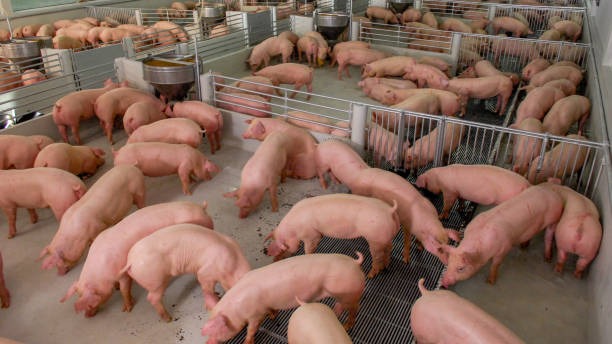
In modern swine production, nutrition plays a decisive role in growth rate, feed efficiency, immune resilience, and overall herd performance. As producers look for natural strategies to support animal health while reducing reliance on synthetic additives, moringa (from Moringa oleifera) has gained increasing attention.
Rich in protein, vitamins, minerals, and bioactive compounds, moringa leaf meal has been studied in various livestock species — including pigs — for its potential to support growth performance, gut health, and immune function.
This article explores its nutritional profile, documented benefits in swine research, and practical feeding considerations.
Nutritional Profile of Moringa for Pigs
1. High-Quality Plant Protein
Moringa leaves contain approximately 20–30% crude protein (dry matter basis) and provide essential amino acids such as:
-
Lysine
-
Methionine
-
Threonine
-
Leucine
These amino acids are critical for:
-
Lean muscle development
-
Growth rate
-
Feed conversion efficiency
2. Vitamins and Minerals
Moringa leaves are naturally rich in:
-
Vitamin A (beta-carotene) – Supports vision, immune response, and epithelial integrity
-
Vitamin C – Assists in stress response and immune defense
-
Vitamin E – Functions as an antioxidant
-
Calcium – Essential for bone strength
-
Iron – Supports oxygen transport
-
Potassium – Maintains electrolyte balance
This nutrient density makes moringa a valuable complementary ingredient in swine diets.
3. Antioxidants and Phytochemicals
Moringa contains several biologically active compounds, including:
-
Quercetin
-
Chlorogenic acid
-
Polyphenols
-
Flavonoids
These compounds exhibit antioxidant and anti-inflammatory activity, which may help mitigate oxidative stress — particularly in fast-growing pigs or those exposed to environmental or weaning stress.
Potential Benefits of Moringa in Swine Production
1. Improved Growth Performance
Several studies have evaluated moringa leaf meal as a partial protein substitute in pig diets.
Research suggests that moderate inclusion levels may:
-
Improve average daily gain (ADG)
-
Support feed conversion ratio (FCR)
-
Maintain carcass quality
For example:
-
Makkar & Becker (1996) reported high digestibility of moringa leaf nutrients in livestock.
-
Gadzirayi et al. (2012) observed improved weight gain in growing pigs supplemented with moringa leaf meal at controlled inclusion rates.
-
Chollom et al. (2020) noted improved growth performance at moderate supplementation levels in weaner pigs.
Results generally indicate benefits at lower inclusion rates (typically 5–10%), while excessive inclusion may reduce palatability due to fiber content.
2. Enhanced Immune Function
Weaning is a high-stress period in pig production. Moringa’s antioxidant and vitamin profile may help support immune resilience.
Studies have reported:
-
Improved white blood cell counts
-
Enhanced antioxidant enzyme activity
-
Reduced markers of oxidative stress
Research by Yang et al. (2020) demonstrated increased antioxidant capacity in piglets fed moringa-supplemented diets.
3. Gut Health and Microbiota Support
Moringa contains natural fiber and bioactive compounds that may:
-
Promote beneficial gut bacteria
-
Improve intestinal morphology
-
Support nutrient absorption
Improved villus height and gut integrity have been observed in some experimental trials involving moringa leaf supplementation in young pigs.
4. Anti-Inflammatory Properties
The flavonoids and polyphenols in moringa may help reduce systemic inflammation, particularly during:
-
Weaning transitions
-
Environmental stress
-
Immune challenges
This may contribute to more consistent growth performance under commercial conditions.
5. Potential Reduction in Antibiotic Dependence
While moringa is not a replacement for veterinary treatment, some studies suggest its antimicrobial and immune-supportive properties may complement antibiotic-reduction strategies in integrated herd health programs.
More large-scale commercial trials are still needed to confirm these outcomes.
Recommended Dosage and Feeding Guidelines
Inclusion Rates in Swine Diets
Based on current literature:
-
Starter/Weaner pigs: 2–5% of total feed
-
Grower pigs: 5–10% of total feed
-
Finisher pigs: Up to 10% with ration balancing
Higher inclusion levels may reduce palatability or increase dietary fiber beyond optimal levels.
Feeding Considerations
-
Use dried moringa leaf meal, finely ground for uniform mixing
-
Balance for crude protein and energy
-
Adjust amino acid supplementation as needed
-
Introduce gradually over 7–10 days
-
Monitor feed intake and weight gain
Consult a swine nutritionist before large-scale inclusion to ensure proper ration formulation.
What Does the Research Say?
Moringa has been widely studied in poultry and ruminants, with growing research in swine nutrition. Evidence suggests:
-
High nutrient density and digestibility (Makkar & Becker, 1996)
-
Improved growth performance at moderate inclusion rates (Gadzirayi et al., 2012)
-
Antioxidant and immune-support effects in piglets (Yang et al., 2020)
However, results can vary depending on:
-
Inclusion level
-
Processing method
-
Basal diet composition
-
Age of pigs
Large-scale commercial field trials remain limited, and moringa should complement — not replace — balanced nutrition and veterinary oversight.
Practical Considerations
Before supplementing:
✔ Ensure baseline diet is nutritionally adequate
✔ Avoid excessive fiber inclusion
✔ Monitor growth metrics
✔ Evaluate cost-benefit performance
✔ Source high-quality, contaminant-tested leaf meal
Natural supplementation should be implemented strategically and evaluated through measurable production outcomes.
Final Thoughts
Moringa (Moringa oleifera) shows promising potential as a natural feed ingredient in swine production, particularly for:
-
Weaner pigs under stress
-
Growth-phase pigs requiring efficient protein utilization
-
Producers seeking natural feed strategies
When used appropriately within a balanced ration, moringa may contribute to improved growth performance, immune resilience, and overall herd vitality.
References
Abdel-Wareth, A.A.A., & Lohakare, J. (2021). Nutritional value of Moringa oleifera and its application in animal feeding.
Anwar, F., Latif, S., Ashraf, M., & Gilani, A.H. (2006). Moringa oleifera: A food plant with multiple medicinal uses. Phytotherapy Research, 21(1), 17–25.
Chollom, S.C., et al. (2020). Effect of Moringa oleifera leaf meal on growth performance and blood parameters of weaner pigs.
Gadzirayi, C.T., Masamha, B., Mupangwa, J.F., & Washaya, S. (2012). Performance of growing pigs fed on Moringa oleifera leaf meal as a protein supplement.
Makkar, H.P.S., & Becker, K. (1996). Nutritional value and antinutritional components of whole and ethanol-extracted Moringa oleifera leaves.
Yang, H., et al. (2020). Effects of dietary Moringa oleifera leaf supplementation on antioxidant status and immune response in piglets.
Comments (0)